

Nyero Rock Paintings is a historical archeological site in Kumi District, Eastern Uganda, known for its ancient rock paintings.
It is currently on the UNESCO Tentative List for World Heritage due to its role as one of Uganda’s most important cultural treasures, under the Uganda Department of Museums and Monuments.
I have lived in Uganda almost my entire life, but I had never travelled to the East.
Of course, my path crossed Jinja, the most famous tourist sanctuary in Eastern Uganda (because of the Nile River), but it was only a 3-hour drive from Kampala. So, other than the special feeling of being at the location of the source of the River Nile, my body craved the ecstasy that came with the rhythm of a long drive.
Going to Ngora, in Kumi District, and exploring six Nyero Rock Painting sites gave me that feeling!
A nearly seven-hour, 258-kilometre bus journey along the Tirinyi–Pallisa–Kumi route offered me a raw encounter with my own natives, who spoke a different language.
Speaking of which, travel within Uganda made me realise that you can live among your people and not know them at all. Monolingual, monoethnic, and homogeneous countries can not relate much, because beyond getting to know someone individually, there is little to learn about the uniqueness of a different society.
This is the case with Uganda’s multiethnic society: With more than 50 tribes, every community has its own language, dances, staple foods, traditions, and way of life. There is therefore a lot to explore even among our own people.
Kumi District is home to the Iteso, also known as the Ateso, a tribe that broke off from the traditional Karamojong/Ateker during a major migration westward from Abyssinia (present-day Ethiopia) and Sudan.
They now live in one of Uganda’s most remarkable Stone Age landscapes, a region where ancient stories endure in the Nyero Rock Paintings. These extraordinary rock shelters offer a rare window into the people, cultures, and history of Uganda’s distant past, as discussed in this article.
The Journey To Nyero Rock Paintings
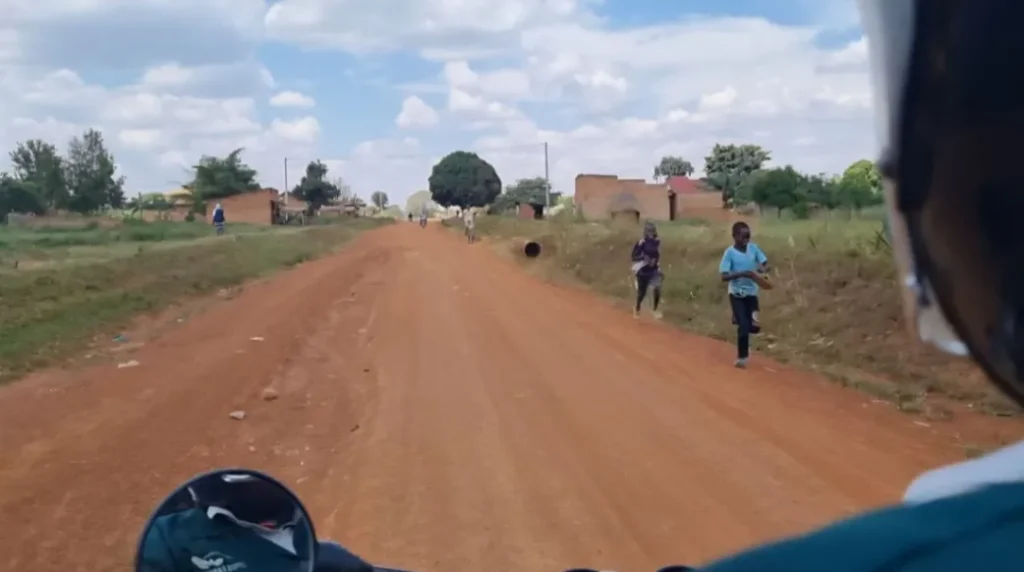
It is about UGX 4000 (about $1) for one person by bodaboda from Kumi Town or Ngora Town to Nyero Rock Paintings.
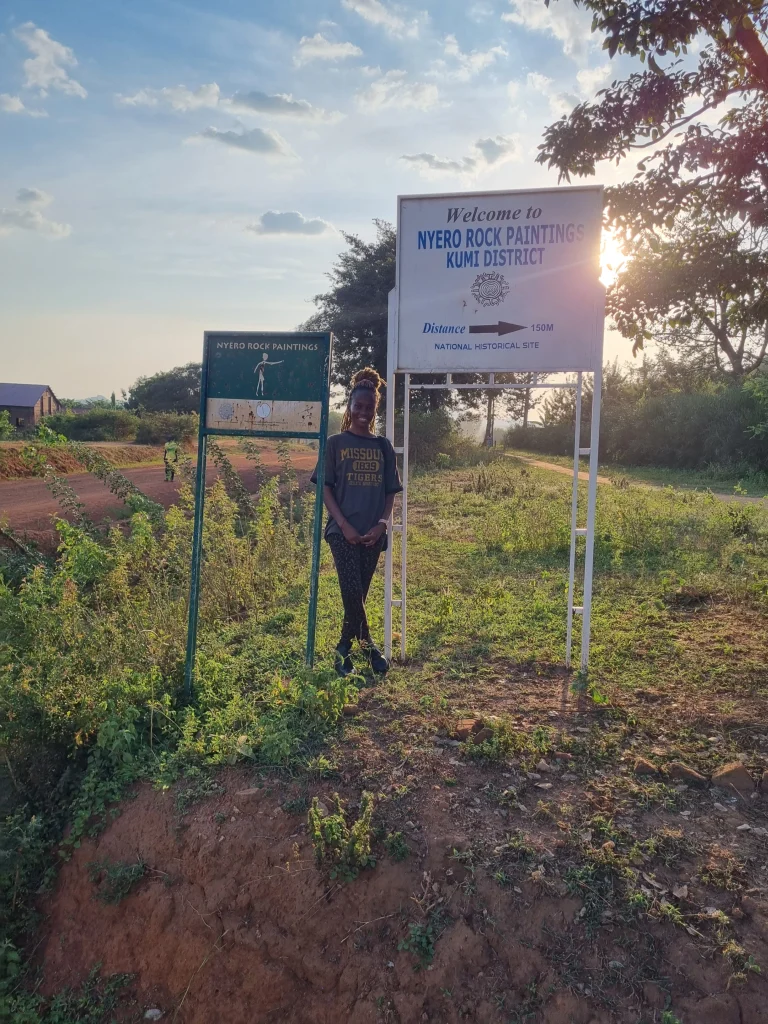
The place looked quiet and isolated, making me wonder briefly if I had arrived at the right destination. But the signpost was there, the rules and regulations were posted on a post in the compound, and the office, with a copy of the famous sun painting at its entrance, faced me.
When I entered the office, a lady called Joyce welcomed me. She issued receipts and later introduced me to a guide who took me around.
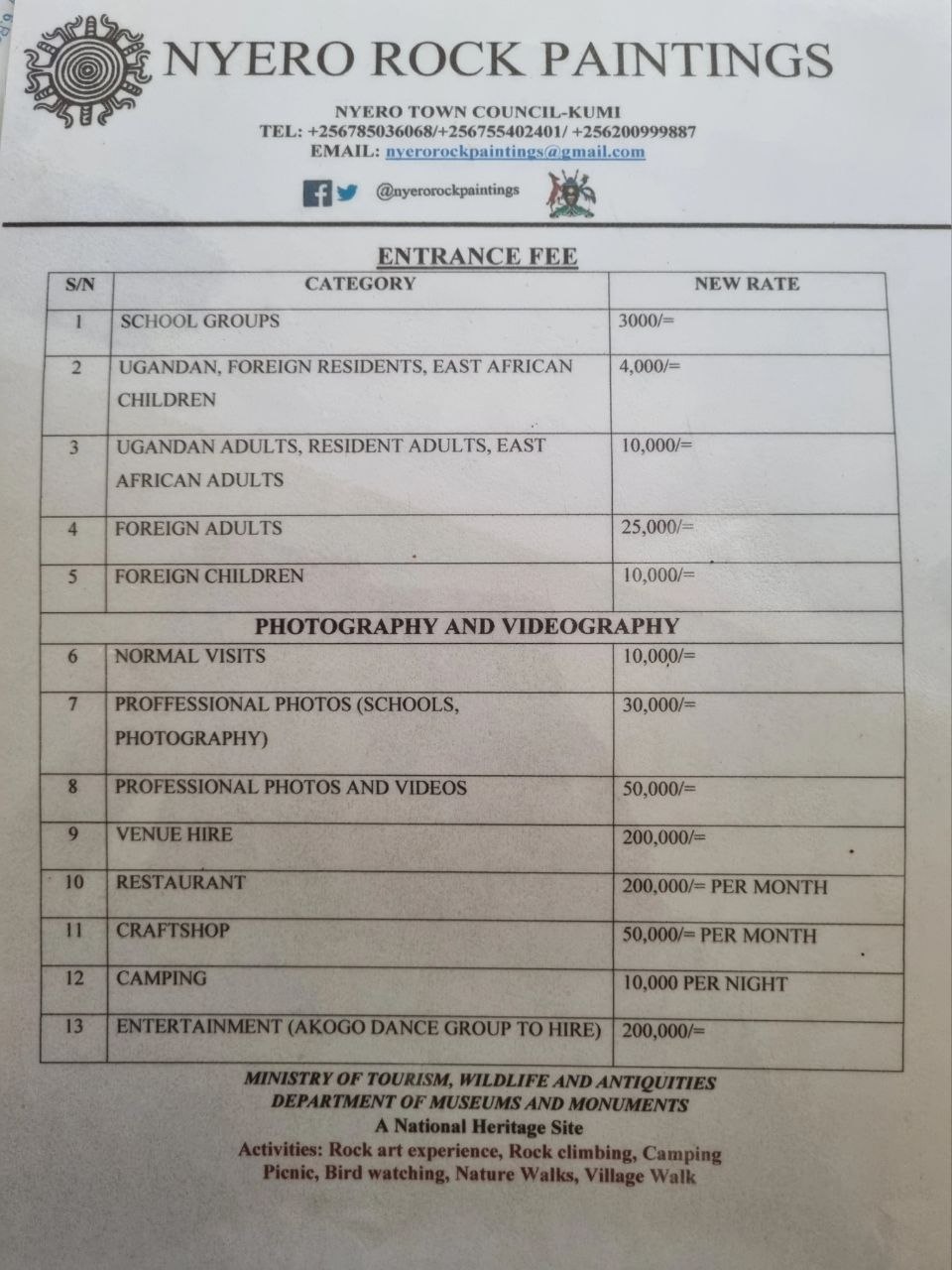
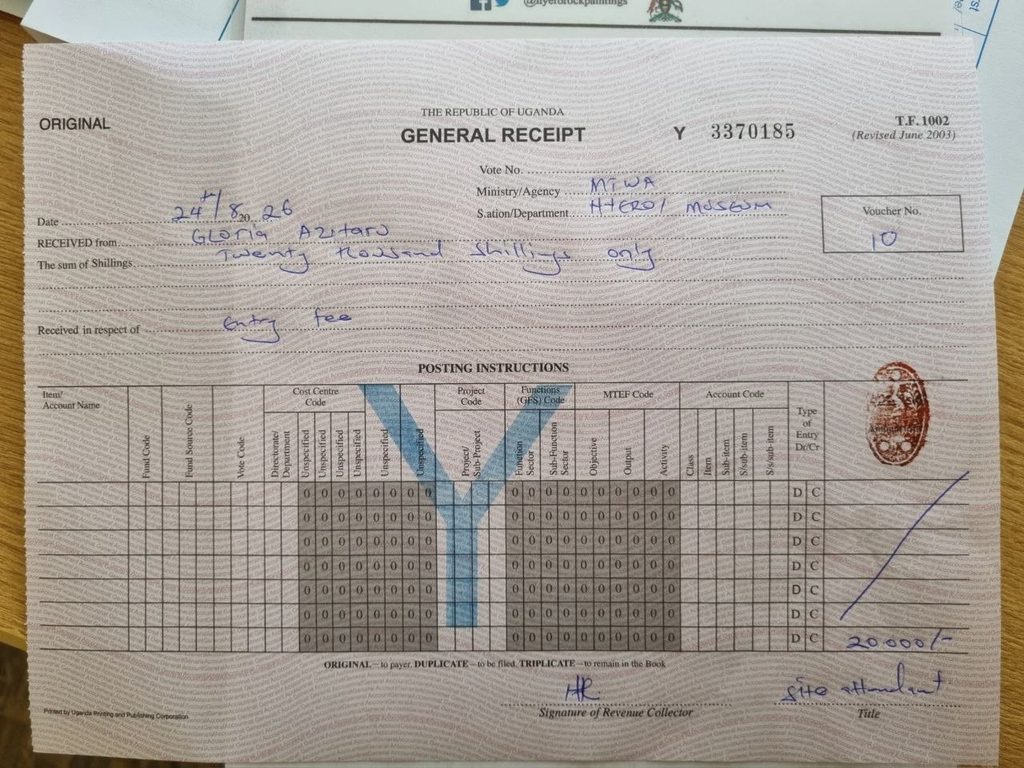
At the end of the experience, you will be expected to give the guide a tip as a way of thanking them for their help.
Meet The Best Guide at Nyero Rock Painting: Mr Opio William
Mr Opio William is unlike other guides I have ever met in Uganda’s tourism industry. The long-serving head caretaker, site guide, and guardian of the caves began working as a guide at Nyero Rock Painting in 1983, just about three years before Uganda’s current presidential regime stepped into power. Mr Opio also witnessed this historic site being used as a camp for soldiers and refugees during the unstable political days in Uganda.
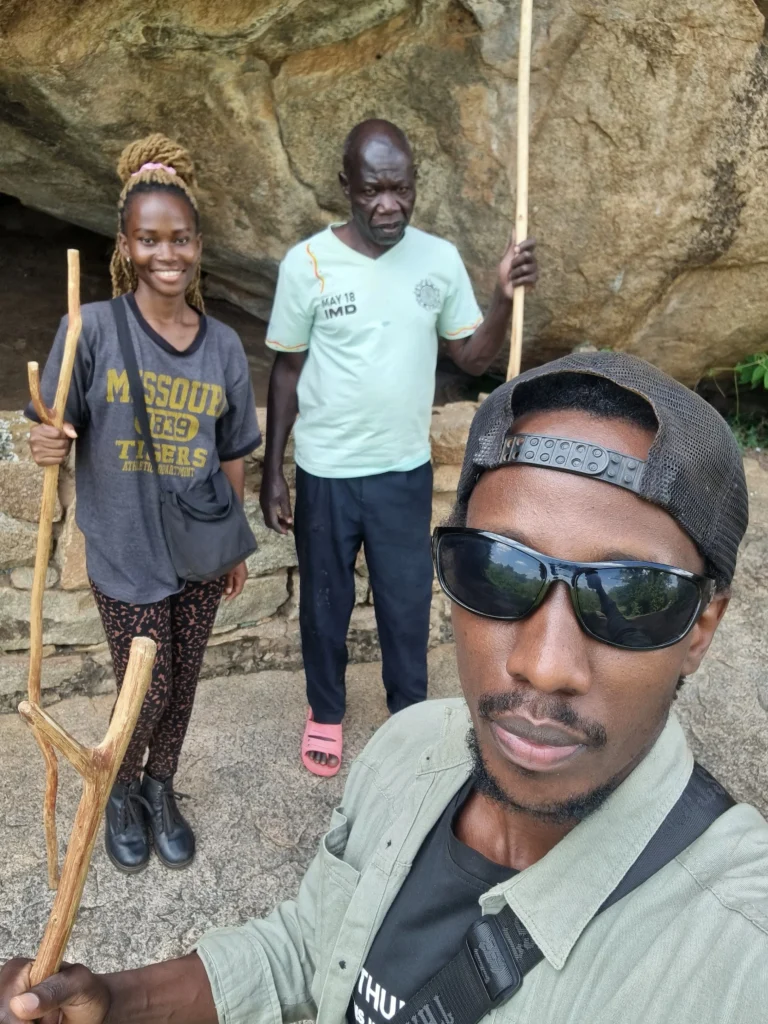
Through his service to different generations of researchers, students, pupils, and archaeologists, Mr Opio William has demonstrated his commitment, experience, authenticity, and love for the preservation of this historical place.
He has been featured on different national media outlets and YouTube channels. In fact, he is happy to feature on any YouTube channel vlog or blog because his heart is for everyone to visit Nyero Rock Paintings.
Rules and Regulations at Nyero Rock Paintings
Observing the rules and regulations at Nyero Rock Paintings is important in helping to preserve the rock art that has already been under threat through the years.
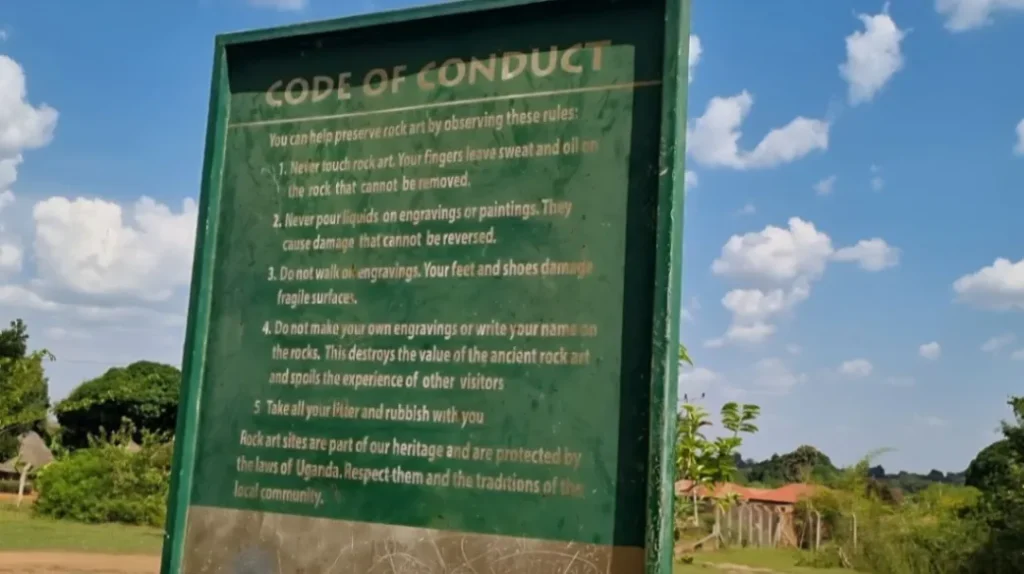
By following these guidelines while touring the site, you also respect the traditions of the local community and partner with Nyero Rock Paintings and the government of Uganda that protect the site by law.
You are expected to observe the following code of conduct;
- Do not touch the Rock Art.
- Never pour any liquids on the engravings.
- Never walk on the engravings.
- Do not paint or write on the rocks.
- Do not litter.
Re-Echoing Mr. Opio’s Knowledge on the History of Nyero Rock Paintings – Facts About the Nyero Rock Paintings/Nyero Rock Art
- The Batwa, a hunter-gatherer group of pygmies, are believed to be the first group of people to live at the Nyero Rock painting site about 3000 to 5000 years ago.
- They lived in the caves created from the large granite rocks that came about by volcanism.
- As a means of communication and expression, the early men (believed to be these Batwa Pygmies) drew signs and marked the rocks with symbols that told their stories, values, and way of life.
- Some of these paintings were also used to map or mark their territory.
- The local men drew the rock art with paint made out of local materials like sap from trees that contained latex, oils, and other liquids. They also used parts of animals, blood and urine, which were fermented and then used for painting.
- Another purpose for these drawings was to come up with other ways of communication and expression other than the dialect that they spoke.
- The Iteso are believed to have arrived about 300 years ago and displaced the Batwa.
- They considered the site as their sacred place with spiritual values where they sought spiritual blessing, fertility among the barren women, rainmaking, initiation, proclaiming blessings, and worship.
- Some of these activities still happen to this day, as some of these groups believe that when you visit the location, you return with spiritual blessings.
- Susa Prayer Mountain in Nyero, a location where chief leaders once performed their cultural activities, now stands as one of the most notable destinations for Pentecostal (Born Again) prayer camps for over 20 years. The neighboring Kumi University sometimes provides extra land for believers who gather in the thousands for prayer to avoid overcrowding.
- Research indicates that the area was once surrounded by water, which then served as a catchment area, but was destroyed due to human activity.
- Maintenance and documentation of the Nyero Rock paintings began in 1913.
- The site became a protected area in 1967, but the land was fully gazetted as a tourist destination in 1973. It is now open to tourists, researchers, students, and the communities to explore, learn, and experience.
- The Iteso people, who are now the present-day residents around the Nyero Rock paintings, were the first group of people to send a message to the Department of archeology to come and carry out research in this location.
- The first researchers, known as the Harwich, excavated an incised bone with concentric designs similar to the drawings found on the rock walls in 1945. Other fossils were also later discovered and kept as important archeological findings in Uganda.
- Carbon dating determined the fossils to be about 3000 to 5000 years old.
- All information documented is very accurate through carbon dating, in-depth research, and findings/facts from local communities.
Visiting The Six Different Sites at Nyero Rock Painting
The importance of watching videos or reading articles of other creators before embarking on an experience is that you plan and know what to expect. This has never made my experience any less exciting. With a little background knowledge I had already consumed, I went to Nyero with the expectation of visiting and experiencing all six sites.
The 6 different sites at Nyero Rock Painting tell the story of the paintings created by the early men who inhabited the area about 3000 to 5000 years ago. These historical sites are the different caves, rocks, and places where these early men made the different historical paintings and lived their daily lives.
In some of these locations, ancient artifacts, tools, and fossils that the early men used were discovered by archeologists.
The paintings across these six sites consist of red and white geometric circles (concentric circles) and other shapes, each carrying distinct meanings and representations, as detailed below.
Sites 1, 2 and 3 are called the major sites because they have clearer, more detailed paintings, and they were also the first sites to be discovered by the local people.
Sites 4, 5 and 6 are known as the minor sites; the paintings here are a bit faded, but their representations carry important messages and meanings as understood and expressed by early man.
Below, we journey through these 6 different sites to discover the paintings and the stories they tell.
Nyero Rock Paintings Site One
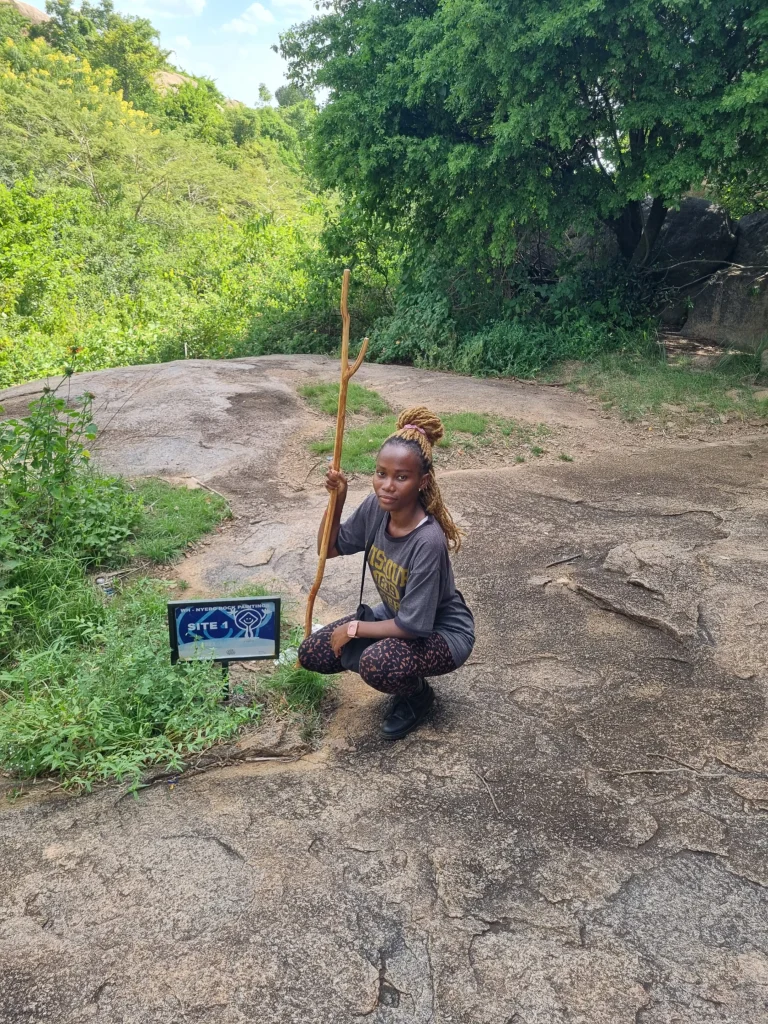
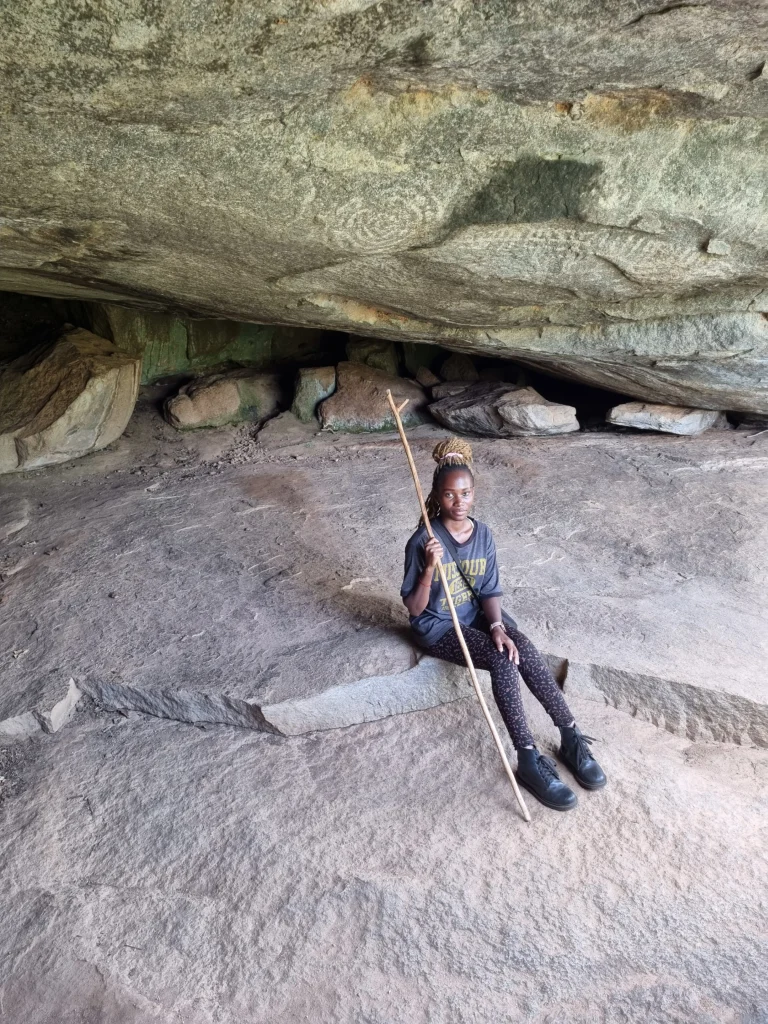
Site one of the Nyero Rock Art is a cave that early men used as shelter for rest, sleep, protection from wild animals, and bonding with their community, and its ancient paintings are white marks on the ceiling of the cave.
The early man’s daily life revolved around survival, rest, and bonding with communities. Therefore, they moved out to hunt and gather fruits, and returned in the evenings to sleep/rest.
The people lived in such large caves in communal settings not just for the bonding and unity values but also as an easier way of defense and protection against dangerous wild animals and strangers.
As a way of life among Africans for many generations, working together and individual contributions to a team are important values that create peace and unity. Therefore, it is believed that everyone moved out to harvest, collect different berries, and hunt meat before returning in the evenings to enjoy the fruits of their labour.
Below, we look at the art symbols at site one of the Nyero Rock Paintings
The Sun
This painting shows the image of the sun shaped in concentric circles.
Many years before Christianity and the Bible were introduced in Africa, with the belief that there is only one true God, early men worshipped different natural features as gods; The sun, moon, rocks, water, wind, and stars are some examples.
For the case of the people living in this site, the sun was their god. As a way of showing reverence, they marked the rocks with concentric circles that represented the sun as their god who provided light.
The Verticals/ The Ladders
Being short people, the Batwa Pygmies used ladders to make some of their daily activities much easier. Therefore, the drawings of the ladders represented this very much needed purposeful tool.
The Crocodile
It is believed that the rocks were once surrounded by water, which was home to many crocodiles.
The painting of the crocodile was a sign of danger to their communities, as a warning to be careful of these dangerous animals.
Nyero Rock Painting Site Two
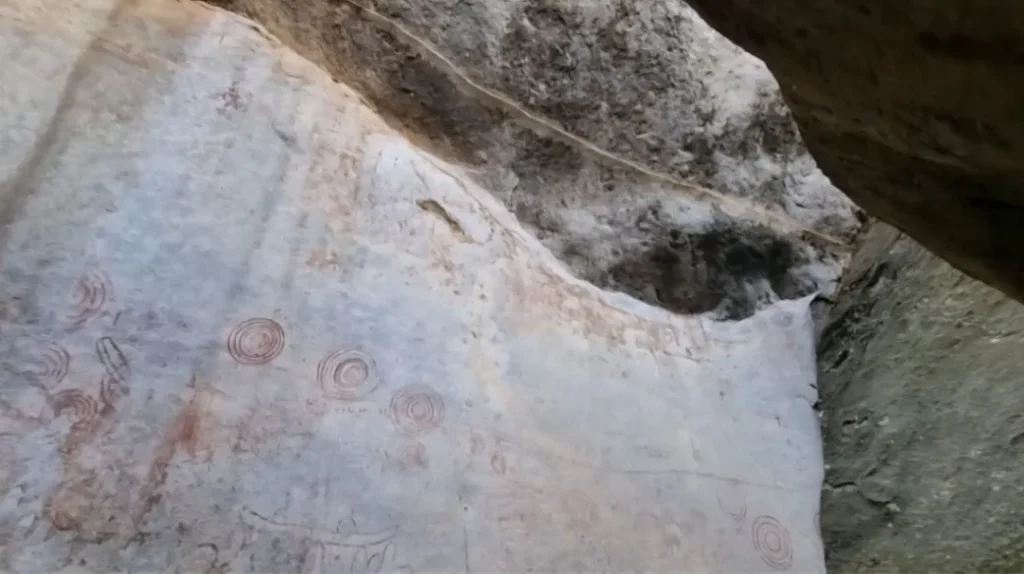
The location has more paintings than any of the other five sites, and these rock paintings are quite high even for the normal human height, proving that the ancient artists used ladders to climb and mark the rocks.
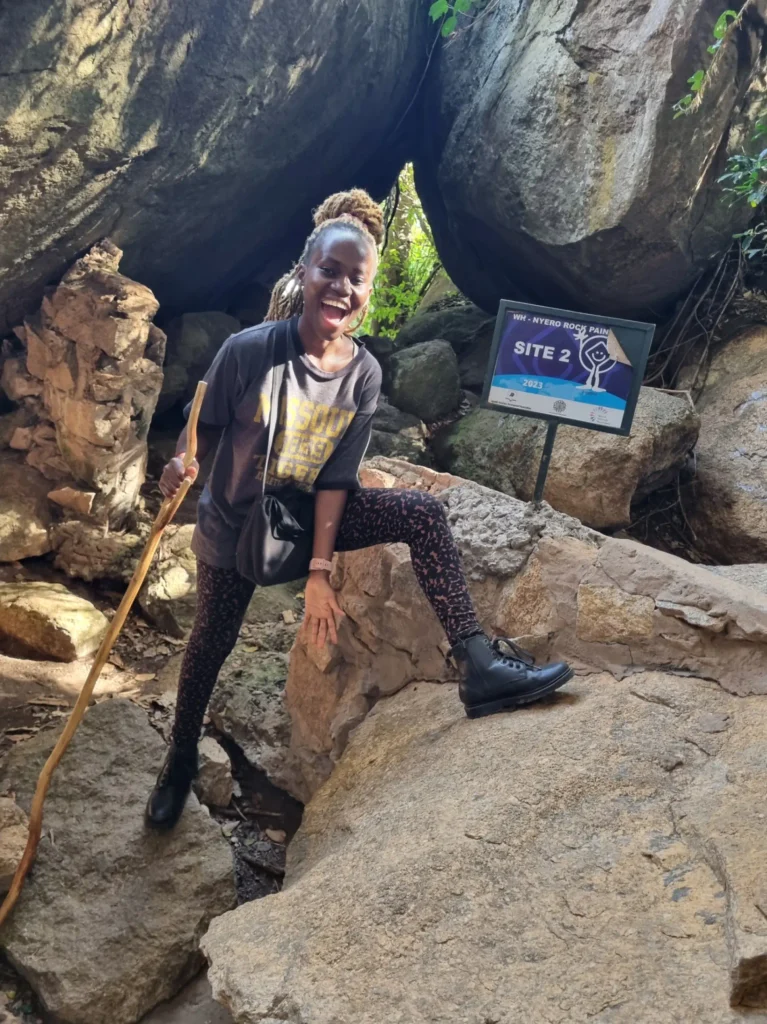
The whole rock was once full of paintings, but some of them were plucked off over the years.
This site was used as an archeological site to get early man’s relics, remains, and fossils, which were found to be about 3000 to 5000 years old through carbon dating.
The paintings at this site are red because they are believed to have been drawn with blood that was mixed with other local materials.
Let’s discover the symbols at site two of the Nyero Rock Paintings.
Canoe/Boat
This painting shows a boat at a water shore, near water lilies. A figure outside the boat helps to push a colleague into the water to assist him in starting to row.
The drawing confirms the history of water and crocodiles being present in the area. The water present was of value to the early men, as they used it for daily activities like fishing, cooling off on hot days, and drinking, among others.
The Sun/ Concentric Circles
These are similar to the ones in site one, and they also represented the sun, which the early men regarded as their god. The shape of the concentric circles also demonstrated the movement of the sun – like the galactic orbit.
The Giraffe
The drawing of the giraffe confirms this area to have been a thick forest which was home to many wild animals.
The Tallies
The paintings of the tallies represented the ways in which these early men counted. It was their calendar system and counting system that allowed them to track and break down the days according to their understanding because there were no calendars for them then.
The Painting of a Man and a Woman at Proximity
This painting represented companionship and socialization within their community through marriage and family, proving that bonding was an important part of their lives.
Nyero Rock Painting Site Three
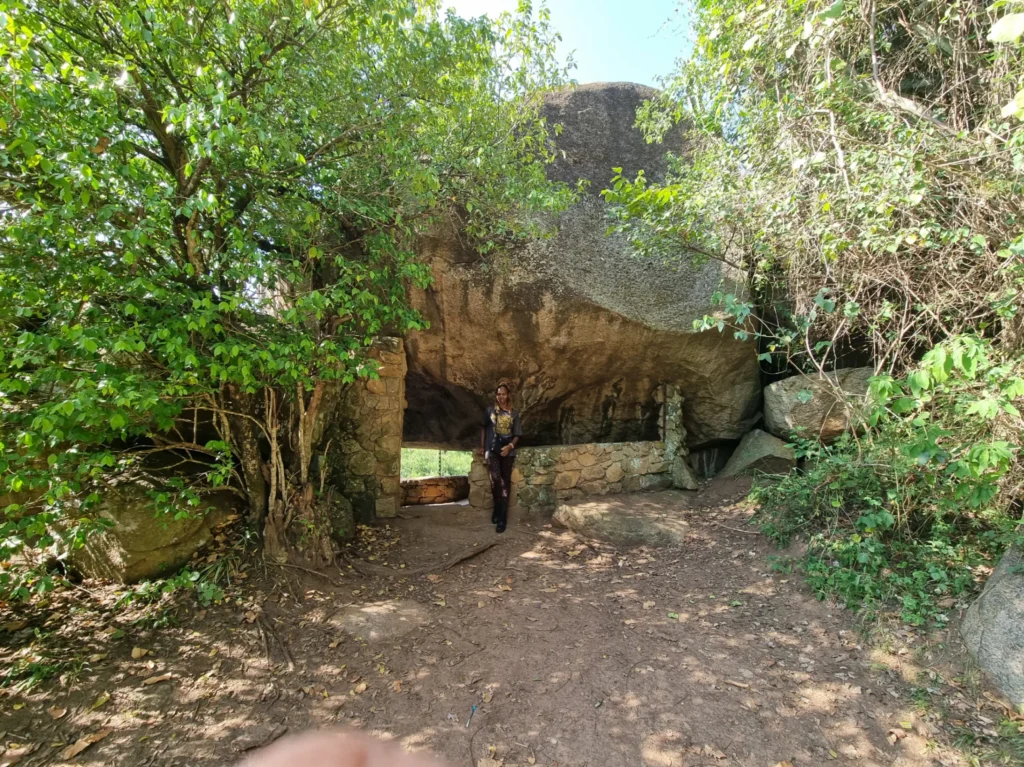

The location has one symbol of the sun with the moon at its side, both representing the god of the sun and the moon. This famous and notable symbol of the sun was also adopted by the Uganda National Museum as its logo.
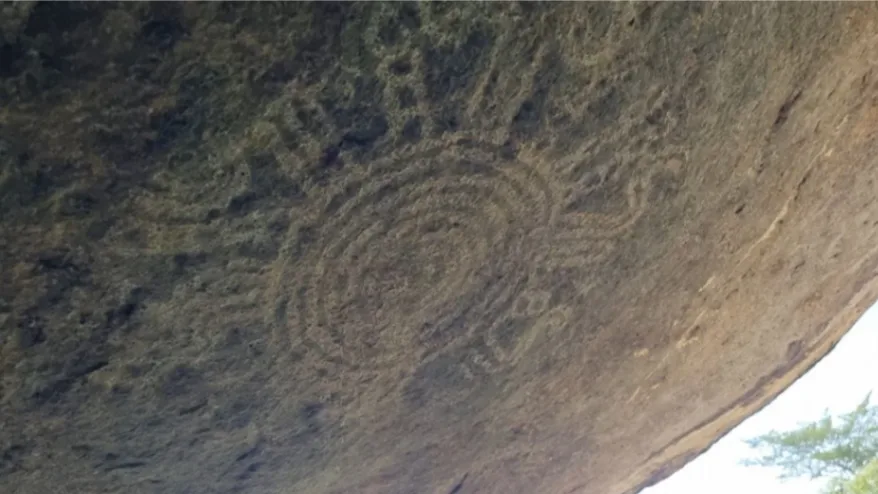
Unlike the other sites, site three will require you to enter while bending or crawling in order to see the historical sun painting and the vast, beautiful vegetation view at the near horizon.
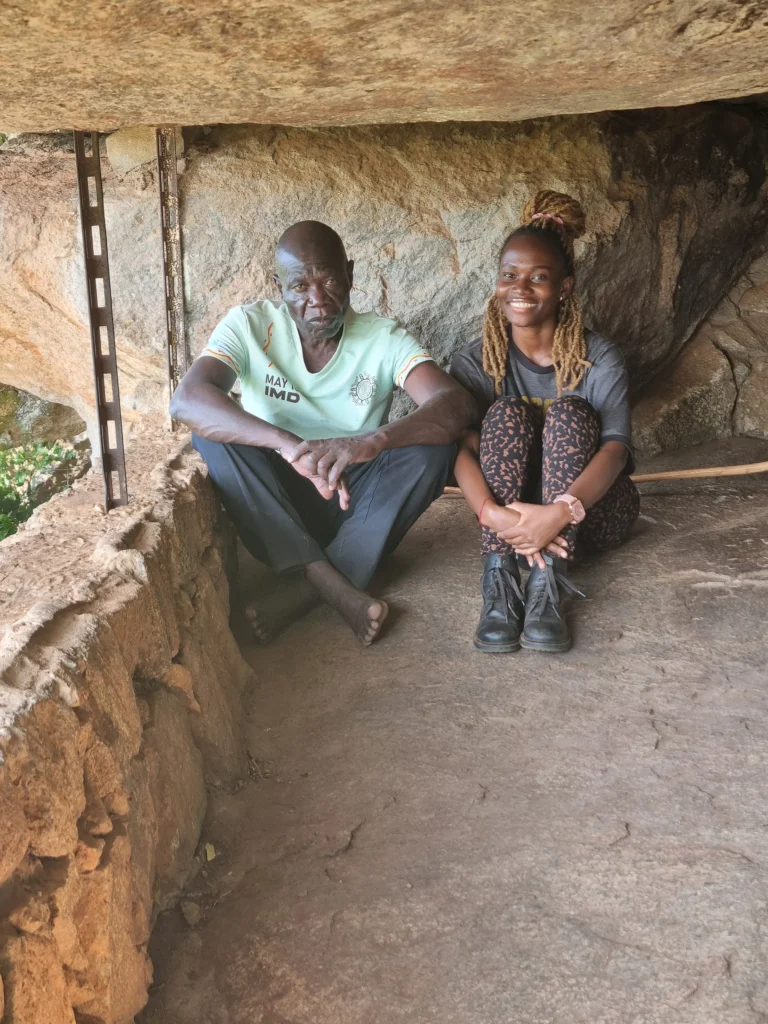
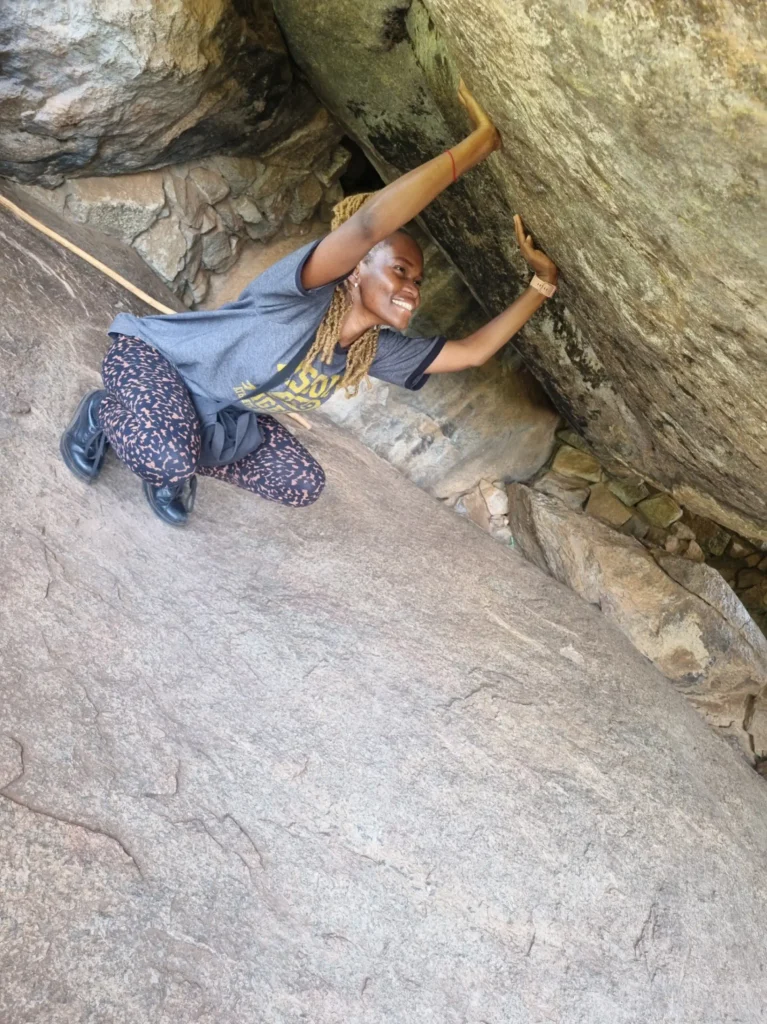
Site 3 is the best place to see the sun as it rises and sets while under the cooling canopy shade of the cave. It is believed that just between the two rocks at this location’s viewpoint, there was a spring of water that was a catchment area.
Nyero Rock Painting Site Four
Site 4, the first minor site of the Nyero Rock Paintings, has a fading art drawing of fire. It represents the important finding of fire used by early man to roast meat, keep warm, and scare away wild animals.
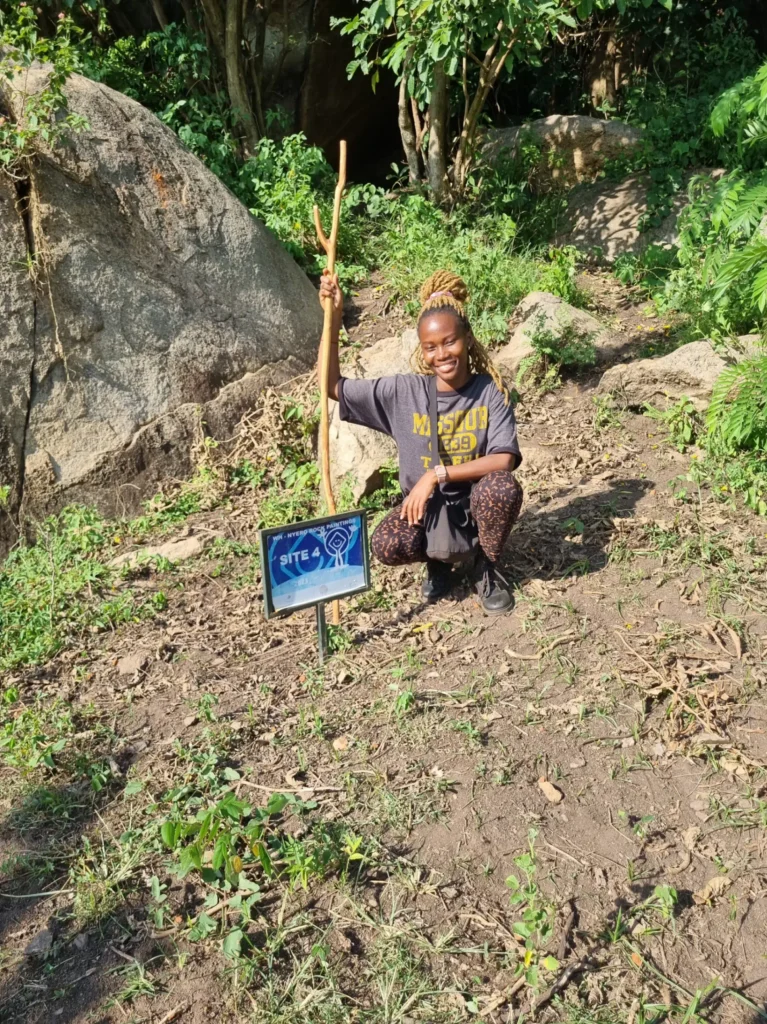
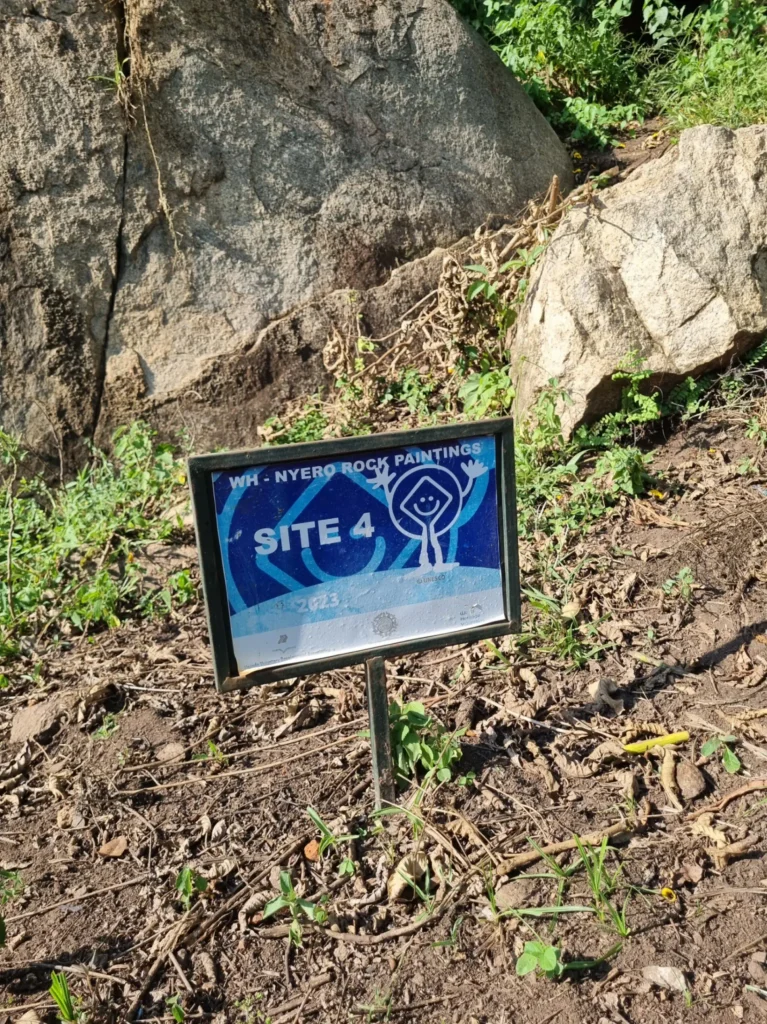
This site is also found near a local community with grass-thatched homesteads.
It was disturbing to know that such an important historical painting was in the community among happy children who would innocently destroy it. Mr Opio, my guide, however, assured me of the ongoing community sensitization that makes the community a part of conservation.
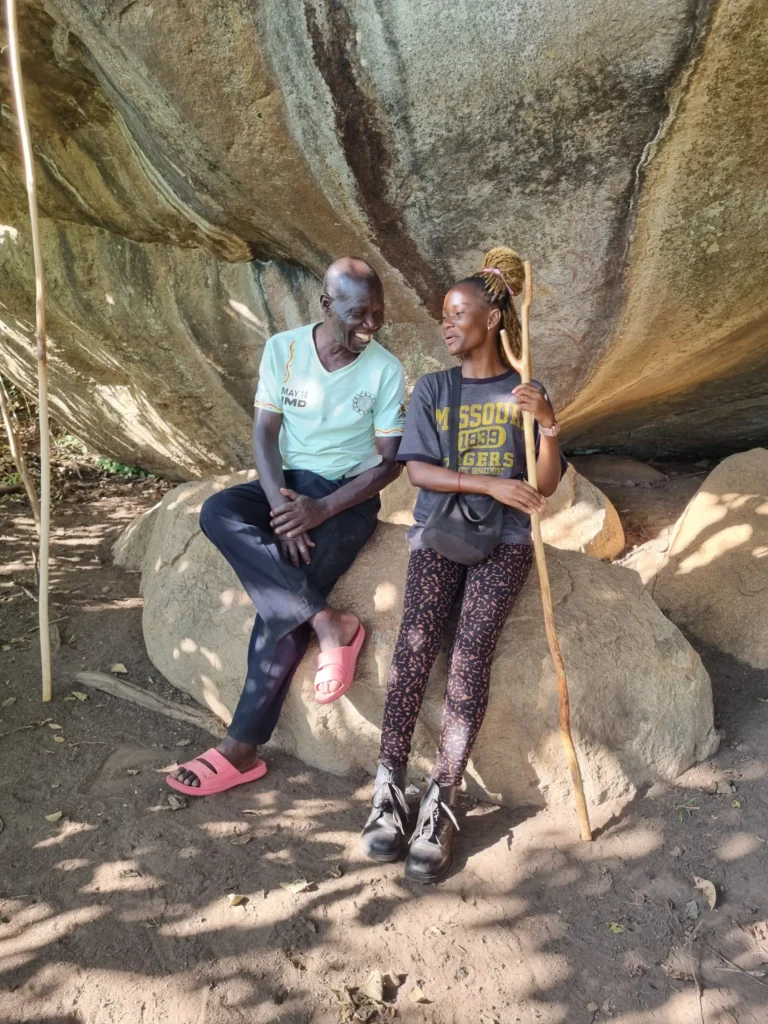
“The local people have learnt to expect and bond with international friends because of these sites. It is therefore a wonderful thing when the community also participates in such preservation and tourism,” said Mr Opio.
Nyero Rock Paintings Site Five
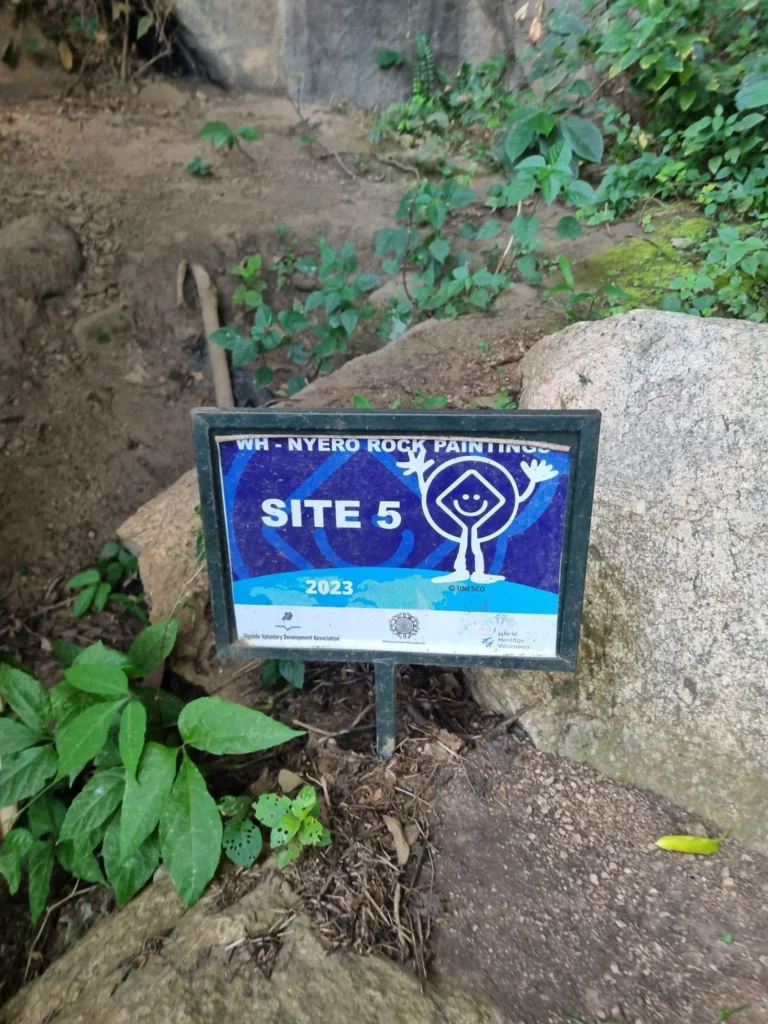
Site 5 is another minor site with the painting of the male reproductive organ, which represented reproduction and sexual pleasure that came with marriage.
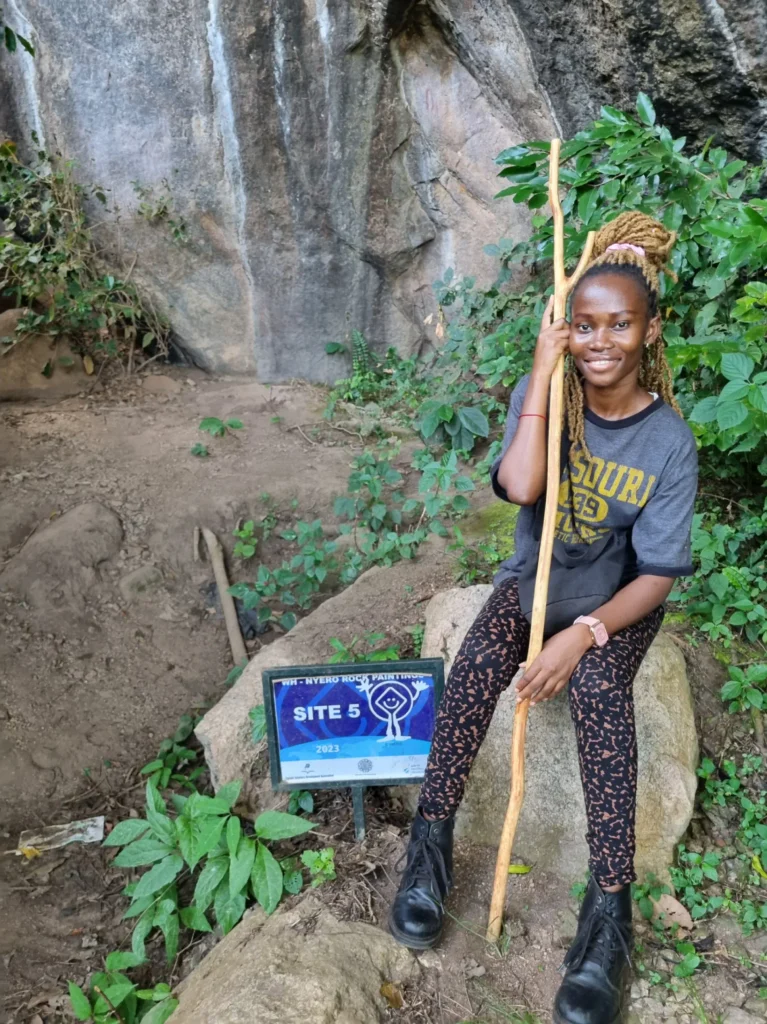
Nyero Rock Painting Site Six
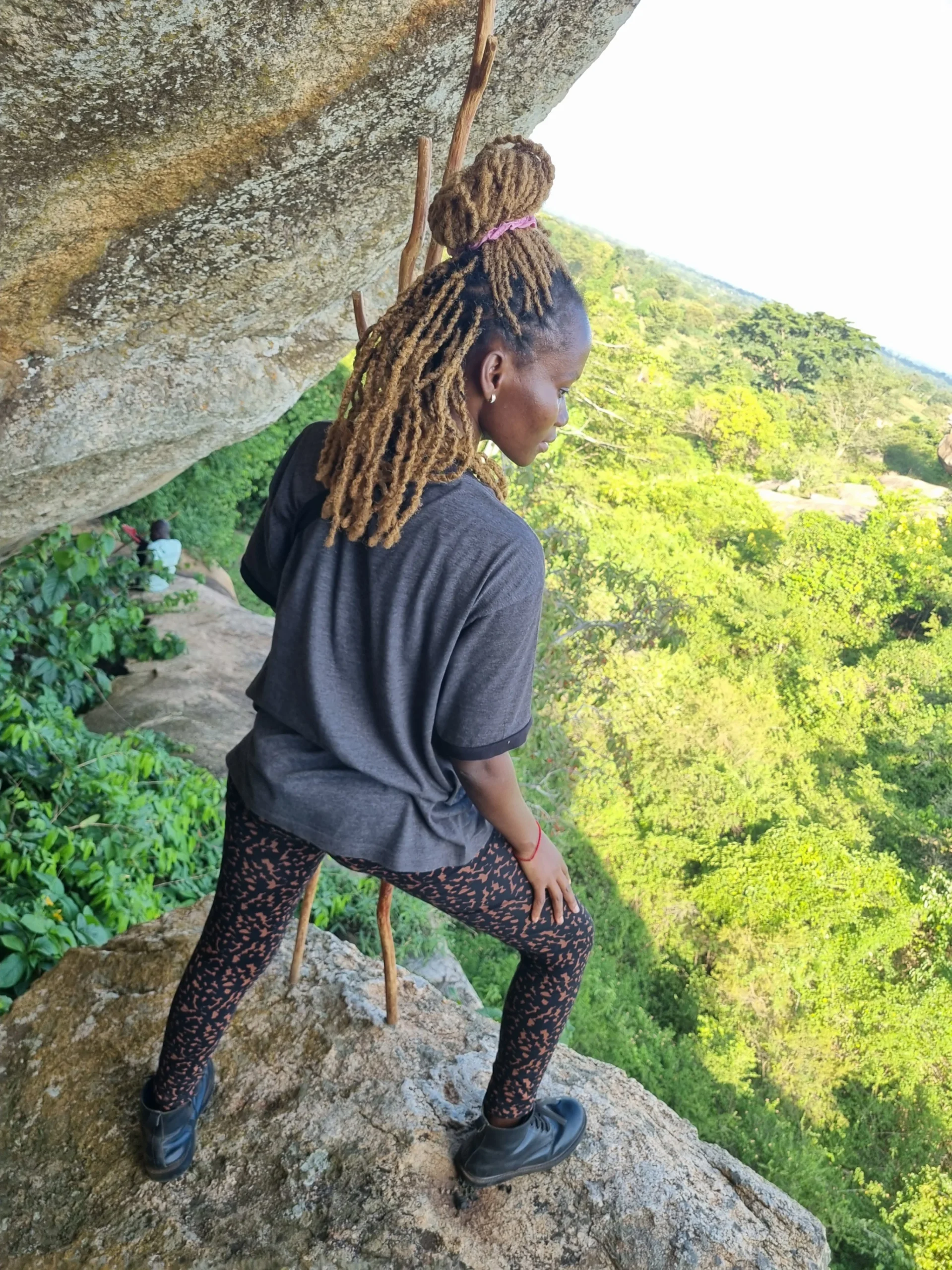
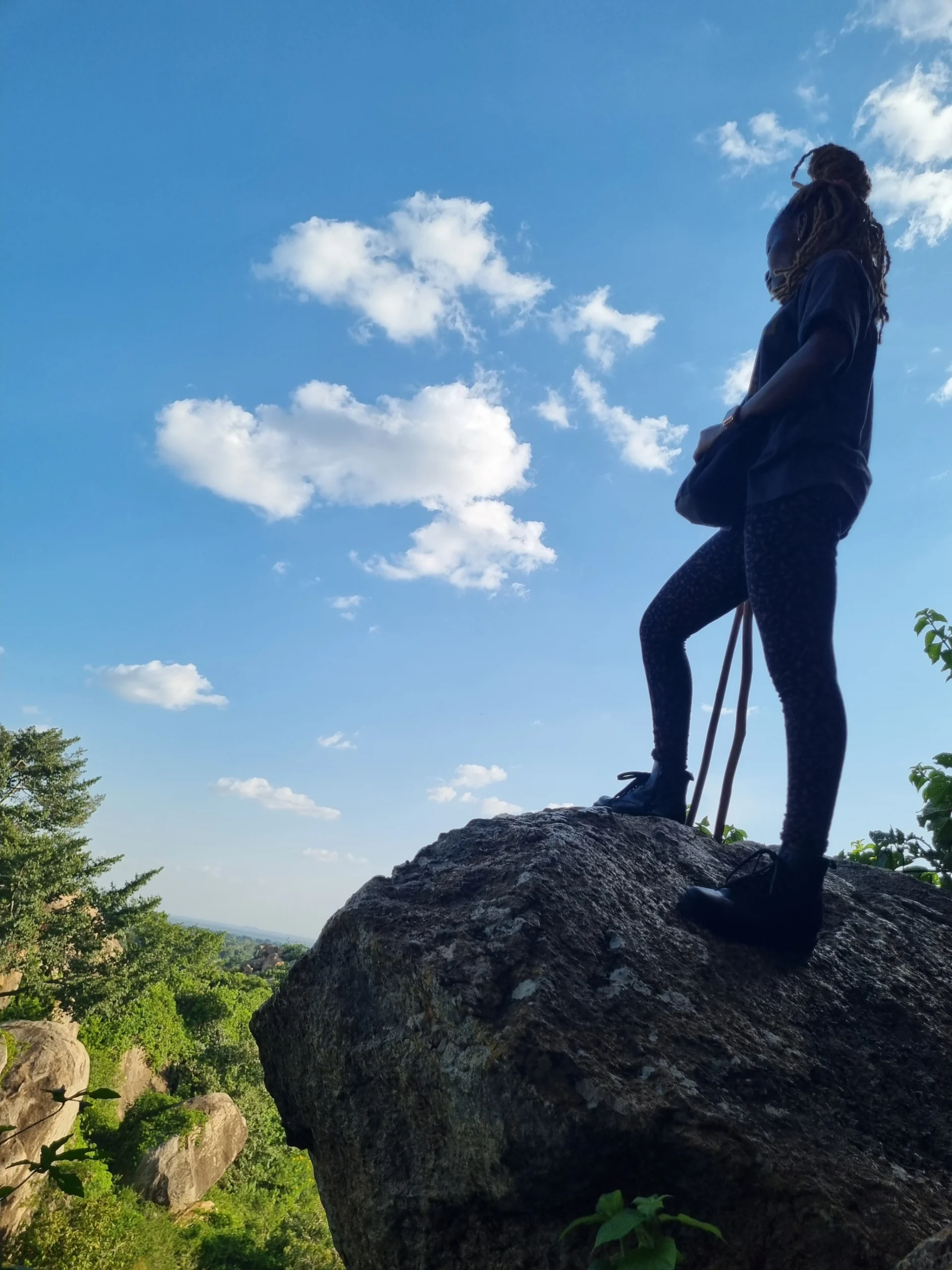
The beauty of site 6 is the journey both to and fro; The challenging hikes that expose the great scenery, breathtaking vegetation, indigenous homesteads, and the terraced farms of locals. This is a unique trail through the rocks, ragged plants, a quite small tunnel, and a mighty cliff from where your eyes meet the exhilarating views of nature that lie below.
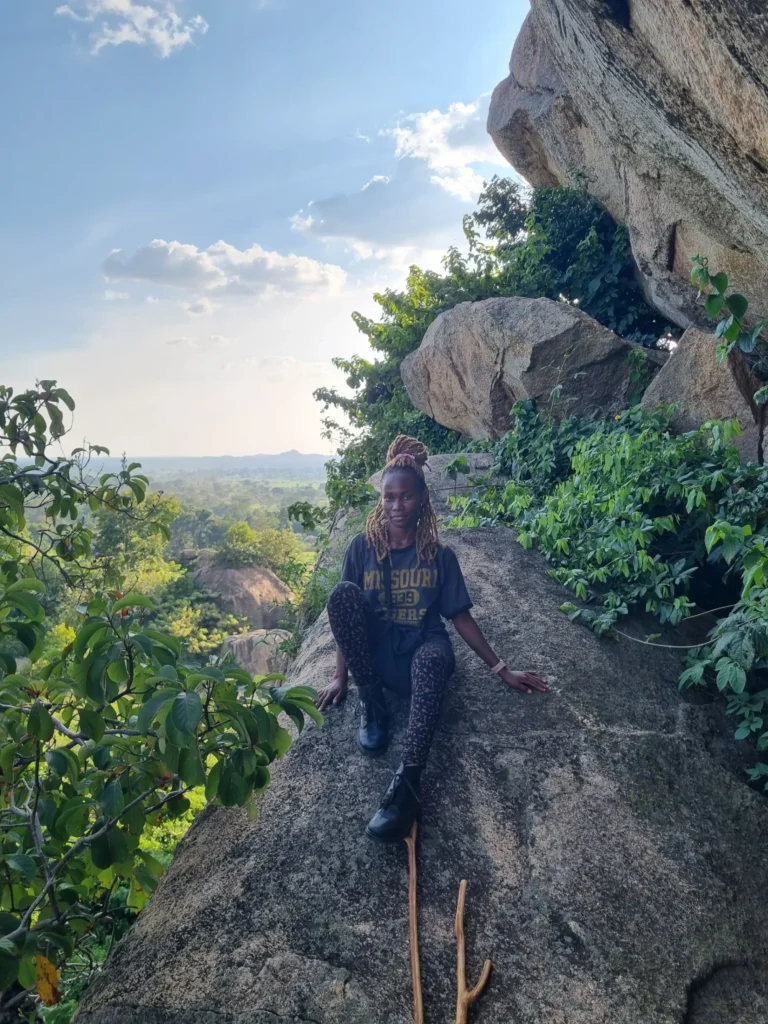
The paintings here are not very clear, but they depict hunters running with animals with the sun upon them. Hunting was one of the most common socio-economic activities among these early men.
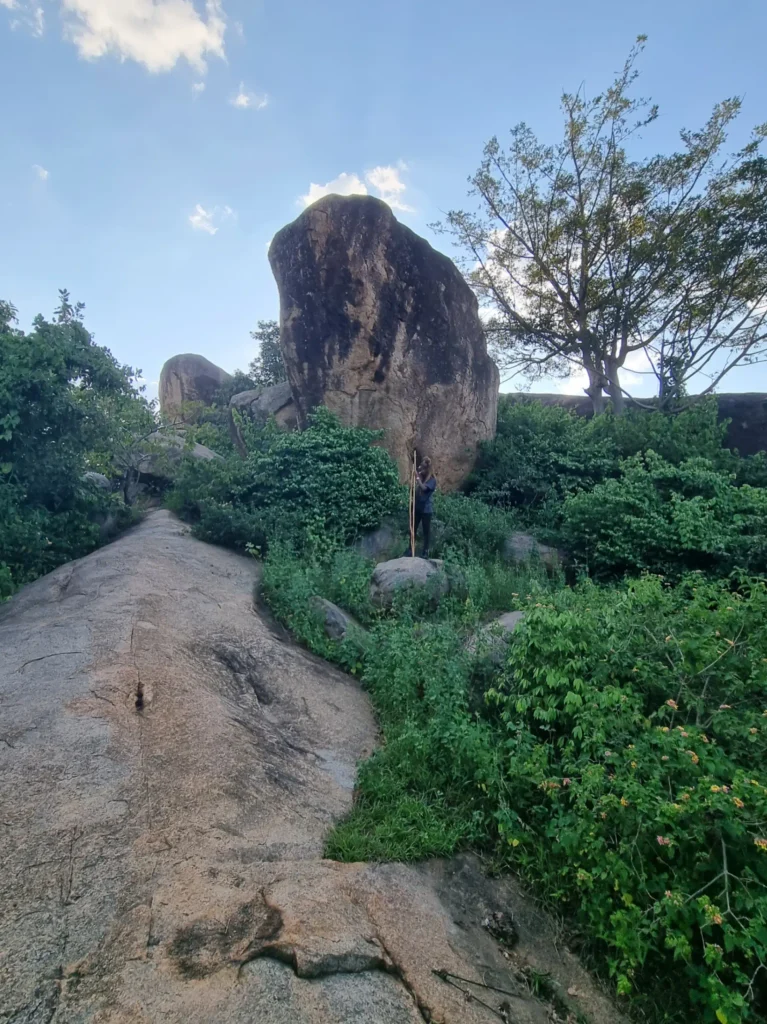
The trail returning from site six to the reception area was different, but also as challenging, breathtaking, and exhilarating as the journey to the site.
Conclusion
The Nyero Rock Paintings are an important part of Uganda’s history and culture. Although there is still debate about who made the paintings, they show the beliefs, traditions, and way of life of people who lived in the area long ago. Their connection to Iteso traditions, including rain-making ceremonies, shows that the site still has cultural and spiritual meaning today.
In summary, the Nyero Rock Paintings help us understand Uganda’s past and preserve its cultural heritage for future generations.
Frequently Asked Questions
What are the Nyero Rock Paintings About?
The Nyero Rock Paintings are about the rock art believed to have been engraved by the Neolithic communities and their current cultural significance, especially among the Iteso.
Where is Nyero Rock Painting Located?
Nyero Rock Painting is found in the Teso region of Kumi District, along the Kumi-Ngora road in Nyero Town Council, Eastern Uganda.
What Activities Can I do at Nyero?
The different activities that you can do at Nyero Rock Painting include viewing the ancient rock art paintings, rock climbing, camping, picnics, bird watching, nature walks, and village walks.
Who were the people who originally dwelt at the Nyero Caves?
It is believed that the site where the Nyero Rock Paintings sit was home to the Batwa Pygmies for about 3000 to 5000 years.
How are the Nyero Rock Paintings Preserved from Destruction?
The caretakers at Nyero maintain the area through cleaning and community sensitization to enlighten locals about the importance of protecting the historical site.

Thanks for the hard work
Everything looks promising 🙏❤️
Thank you.
To more strength to continue working hard and creating more promising work.